


Building Peace and Trust: Nyakach Boda Boda Group’s Contribution to Peace andSecurity.

SUCCESS STORY
- SUCCESS STORY TITLE:
Building Peace and Trust: Nyakach Boda Boda Group’s Contribution to Peace and
Security. - PROBLEM OVERVIEW:
Nyakach County faced escalating violence, exacerbated by uncoordinated efforts between the
Boda boda groups, security forces, and local NGAO members. Illiteracy and a lack of
information channels hindered these groups from sharing vital information, contributing to
ongoing conflicts. Some Boda boda members were even involved in instigating violence,
believing they were defending their community. - PROGRAM/ACTIVITY DESCRIPTION:
NCCK through the Mulika Initiative intervened to build community capacity, specifically
empowering Boda boda and matatu operators to contribute to Early Warning Early Response
(EWER) pathways for lasting peace in Nyakach. The initiative aimed to bridge the information
gap, improve communication channels, and link these groups with relevant authorities to
respond to threats effectively. Training sessions were conducted to educate the Boda boda riders
about their roles in early response, peacebuilding, and violence prevention. - PROGRAM/ACTIVITY OUTCOMES:
Boda boda riders gained the confidence to voice their concerns and share critical
information.
Capacity-building efforts led to enhanced collaboration between Boda boda groups,
public transport providers, and the Ministry of Interior.
The Boda boda riders became vigilant reporters of crimes and potential threats,
improving community safety.
Boda boda groups were equipped to train others, expanding the network of informed
peace advocates.
Increased awareness among Boda boda riders about their responsibilities in community
peacebuilding and violence prevention. - STORY ABSTRACT:
Situation Prior to the Intervention: Nyakach Sub County was plagued by escalating violence,
aggravated by disorganized responses from local groups and authorities. The lack of
coordination and information sharing among Boda boda riders, security forces, and NGAO
members exacerbated the situation.
The Intervention: NCCK engaged Nyakach’s Boda boda riders, fostering dialogue and forging a
path towards unity and peace. Training sessions empowered them to recognize their vital role in
early response and community safety. Through these efforts, communication channels improved,
allowing timely reporting of potential threats.
The Outcome: Chief of Jimo East, Mr. John, acknowledged the positive change: “The
relationship between the groups has improved, and we have been receiving timely information
about potential threats and signs of violence. For instance, Ezra Odhiambo, a Boda Boda
member, alerted us to a potential attack, and with the community’s support, we averted the
incident.”
Ezra Odhiambo shared his experience: “The training provided by NCCK was eye-opening. I
realized that ensuring peace and cohesion is everyone’s responsibility. I recently helped prevent a
brewing attack by following the training’s principles and engaging with the community. Peace
was maintained, thanks to our efforts.” - CHECK IF ANY OF THE FOLLOWING ARE BEING SUBMITTED TO COMPLEMENT YOUR STORY:
□ Testimonials
□ Quote from Partner/Participant –
Mr. Ezra Odhiambo: “The training opened my eyes to the importance of peace and unity. It
empowered me to take action and prevent a potential attack, and I’m grateful for the knowledge
and skills I gained.”
□ Sample of Materials Produced
□ Press Release
□ Promotional Materials
□ Photo(s) of Project
□ Video/Audio Clip
□ Other (Explain: __) - CONTACT INFORMATION:
Name:
Title:
Organization:
Phone:
E-mail:
Name:
Title:
Organization:
Phone:
E-mail: - DOES THE ORGANIZATION HAVE PERMISSION TO SHARE THIS SUCCESS STORY?
□ Yes □ No - DATE STORY SUBMITTED: 23rd October 2023
- DASH PROJECT OFFICER:
- Overall Style Reminders
□ Keep paragraphs short – no more than 5-6 sentences.
□ Keep the story to no more than two pages.
□ Stick to the facts. Do not interject an opinion unless you attribute it to someone.
□ Avoid using passive voice (e.g., “Training were provided.”). Use active voice (e.g., “X
partner provided Y training.”), and be clear about who is doing the action in every
sentence.
□ Include direct quotes if they strengthen the story.
□ Limit use of acronyms. If you use acronyms, spell them out on first mention.
□ Use plain language.
□ Avoid jargon. Readers often skip over terms they don’t understand, hoping to get their
meaning from the rest of the sentence.
□ Keep messages simple and concise.
□ Avoid broad, sweeping statements (e.g., “There was a noticeable increase in healthy
eating habits” or “A significant amount of money was saved”).
- Published in Nyanza Region

Empowering Youth for a Brighter Future: The Impact of the NCCK Linkage Program in Makueni

The problem of youth unemployment came to limelight during the Kenya Gen-Z protests. The NCCK linkage program in Makueni county made strides towards bringing a solution to this problem. During the first phase, 259 youths from 20 groups received mentorship on various matters including mental health, personal development and social skills helping them to adopt acceptable survival mechanisms in the society in spite of the numerous challenges they are facing. During the second phase, 80 youths were linked to various institutions helping them learn useful skills to boost their innovation and employability and gain access to funding for those in or are aspiring self-employment.
Daniel Musyoka before the NCCK linkage he was running his small cyber business but it used not to be very much effective. He highlights that he struggled to manage the business’ finances more so differentiating his personal and capital finances. The linkage program came in handy as a mentor and teacher for him in managing business and resources. This has in turn led to a growth in his business. He was mentored on how to monitor the business’s growth, which he could not do before. This has been very impactful as he is now able to monitor the progression of his business. He looks forward to growing his business through the skills he attained and employ young people.
- Published in Lower Eastern Region
Transformation of Athi Ward through tree planting
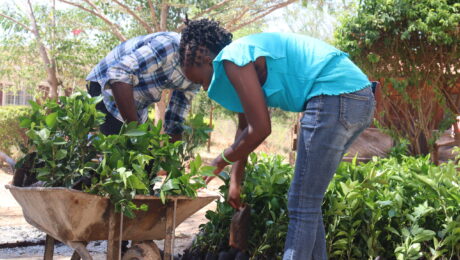
For years, residents of Athi Ward have been grappling with unpredictable weather—intense droughts, soil erosion, and dwindling water supplies. But now, a remarkable change is taking place. A whopping 60,000 tree seedlings have been planted, marking the start of a new chapter in environm restoration, all thanks to the NCCK and the support of CFGB through UCC. Among these seedlings are neem, acacia, Senna siamea, Melia volkensii, and fruit trees like mangoes and lemons, each selected for their resilience in the region’s semi-arid climate.
The once desolate landscapes are now alive with young trees, lovingly cared for by the local community. Benedict Musango, a small-scale farmer from Nzaini village, shares, “These trees are not just for us. They are for our children and their future.” With each passing day, these trees are growing stronger, providing shade, preventing soil erosion, and enhancing biodiversity. Their presence is already making a noticeable impact, with more birds returning and the soil retaining more moisture.
The community isn’t just planting trees—they’re committed to protecting them. In Kilawa, Kalivu, Monguni, and Katilini sub-locations, residents are making sure that every seedling gets enough water, protection from grazing animals, and regular care. Acacia trees will offer fodder for livestock, while Melia volkensii, often referred to as the “Mukau” tree, will eventually provide high-quality timber, opening up economic opportunities. Neem trees, celebrated for their medicinal benefits, will contribute to both health and environmental conservation. Meanwhile, the fruit trees will yield nutritious fruits, boosting their health and providing a source of income.
Breaking Barriers: How Kapkarin Village Secured Their Right to Water
The residents of Kapkarin village in Kapsowar ward struggled with a persistent water crisis despite the allocation of funds to the Kapkarin Water Project for two consecutive financial years. Hopes of accessing clean and reliable piped water were repeatedly dashed as the local administration and project contractor colluded to stall the project, denying the community their rightful access to this essential resource.
For years, the Kapkarin Water Project remained a symbol of broken promises and lost hope. Despite millions of shillings being allocated to the initiative, the water tank stood empty and abandoned, failing to serve its intended purpose. As a result, community members were forced to trek long distances in search of water for both domestic use and their livestock. The dire situation led to devastating consequences—many animals perished due to prolonged water shortages, and children frequently missed school as they joined their families in the daily struggle to fetch water. Women and young girls bore the heaviest burden, suffering from persistent back problems caused by carrying heavy containers over vast distances. The lack of access to clean and reliable water not only threatened livelihoods but also deepened social and economic hardships within the community

Abandonded and empty tank
Determined to bring about change, the community—supported by the National Council of Churches of Kenya (NCCK) in partnership with DanChurchAid (DCA)—embarked on a journey of relentless advocacy, community mobilization, and strategic stakeholder engagement. In 2023, they conducted a social audit of the project, critically examining its progress and identifying key gaps. This effort culminated in an accountability forum that brought together community champions, the local ward administrator, and members of the project management committee. The forum resulted in a collective resolution to compel the contractor to complete the project and ensure that the community could finally access clean water.
In 2024, with continued support from the project, community members followed up on the implementation of the social audit recommendations. Their efforts revealed significant progress— the project had been revived and was nearing completion, with only the installation of air valves remaining. This milestone marked a major step forward in the community’s fight for water access and underscored the power of collective action in holding duty-bearers accountable.
With further advocacy efforts by community members, the air valves were enventually installed and the Kapkarin community members now enjoy piped water!

The community members lining up for water from a communal water point
Through resilience and collective action, the residents of Kapkarin have turned their struggles into a success story. The revival of the water project stand as a testament to the power of accountability and community-driven advocacy. As one community champion proudly stated, “Water is life, and through unity and persistence, we have reclaimed our right to it. This achievement proves that when a community stands together, no challenge is insurmountable.”
From Struggles to Surplus: How Sarah Mugo Transformed Her Farm and Secured Her Family’s Food Security Situation.
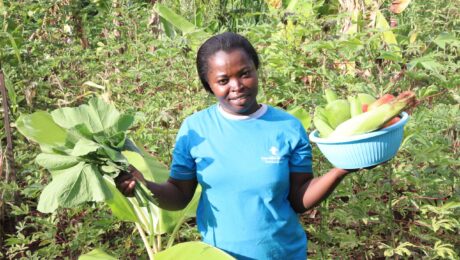
Through NCCK’s training in Conservation Agriculture (CA), Sarah embraced sustainable farming methods that have transformed her yields and secured her family’s food supply year-round.
Conservation Agriculture emphasizes three core principles: minimum soil disturbance (no tillage), permanent soil cover, and crop diversification. Inspired by these techniques, Sarah tested them on her 0.34-acre piece of land during the recent short rainy season. She planted maize using planting basins enriched with manure, a method renowned for capturing and retaining water while maintaining soil moisture. Alongside her maize, she introduced an alley of pigeon peas, a legume that enriches the soil with nitrogen and provides additional harvests.
The results were nothing short of remarkable. On land where she previously harvested only 90 kilograms of maize using conventional methods, Sarah is now set to reap an astounding 900 kilograms! This ninefold increase in yield has elevated her family to 12 months of adequate food provisioning—an indicator of a food-secure household.
But Sarah didn’t stop at maize and pigeon peas. With her husband’s unwavering support, she diversified her farm with an impressive array of crops, including millet, green grams, sweet potatoes, groundnuts, cassava, bananas, and sugarcane. She even ventured into livestock farming with dairy goats and Improved Kienyeji chicken. Supporting all these efforts is a farm pond, established with assistance from NCCK, which provides water for her crops and livestock, ensuring consistent productivity even during dry spells.
Sarah’s story is a testament to the power of climate-resilient practices and the impact of community-based support. Her determination, coupled with the knowledge she gained through training, has turned her farm into a thriving, diversified enterprise.
“I never thought I could achieve this level of success on such a small piece of land,” Sarah reflects. “Conservation Agriculture has changed everything for me and my family. Now we have enough food, and I’m even exploring markets for surplus produce.”
Her story inspires countless other farmers to adopt sustainable practices and shows that with the right tools, training, and support, farmers can overcome the challenges of climate change and build thriving livelihoods.
Here are some pictures of Sarah’s farm, showcasing her various enterprises and the incredible transformation of her land.
From Scholarship to Success: My Journey of Gratitude and Perseverance
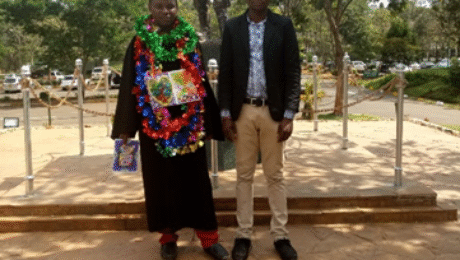

My name is Erick Masingo Wasike, and my story is a testament to the life-changing impact of education after receiving a scholarship from William Budd through NCCK. Growing up, we faced significant financial challenges. After the first term of my first year, my education was nearly cut short because my parents could not afford it. This scholarship not only covered my school fees but also allowed me to focus on my studies without worrying. It taught me that education is an equalizer.
For my tertiary education, I applied for government bursaries and took loans to pay my fees, determined not to let financial barriers hinder my dreams. In 2017, I graduated from the Technical University of Kenya with a degree in Electrical Engineering. Today, I’m a contractor in solar supplies, and my dream is to venture into entrepreneurship and create job opportunities for others.
Thank you, William Budd, for contributing to brightening my future. My earnest plea is to consider sponsoring students right from their first year, but if your generosity can be extended to those who qualify for tertiary education, that would be wonderful.
- Published in Coast Region, Western Region
Uniting for Progress: Vihiga’s Path to Community Transformation

The Challenge
Vihiga County in western Kenya faced interconnected challenges threatening community wellbeing:
- Social issues: Increased gender-based violence, rising suicide rates, and rampant drug abuse
- Political disunity: Early campaigning and exploitation of youth for political gains
- Economic struggles: Poor infrastructure and high unemployment despite rich resources
- Governance gaps: Inadequate citizen engagement creating disconnect between leaders and community
Our Approach
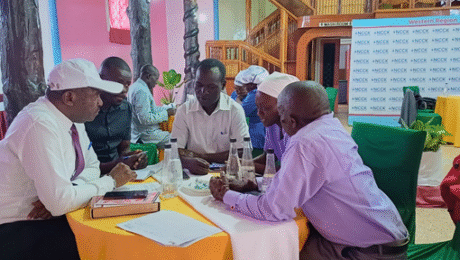
The Intracounty Dialogue brought together religious leaders, community representatives, and local stakeholders for an in-depth conversation on the challenges facing Vihiga County. The program utilized:
- Facilitated group discussions
- Collaborative scenario building
- Inclusive problem-solving approaches
- Cross-sector partnership development
Key Outcomes
“This engagement has opened our eyes to the power of unity. As religious leaders, we now understand our crucial role in shaping the fabric of our society. Together, we can guide Vihiga towards a brighter, more prosperous future.”
— P.C Seth Agala, NCCK Western Region Chairman
The dialogue created tangible commitments and plans:
Religious Unity
Religious leaders committed to fostering unity among churches and providing direction to society, recognizing their essential role in community building.
Improved Governance
Stakeholders established concrete plans to enhance information dissemination and create meaningful public participation channels.
Integrated Civic Education
Church leaders pledged to incorporate civic education into their sermons and increase involvement in community development initiatives.
Economic Empowerment
The community identified specific programs for youth entrepreneurship and agricultural development to address unemployment.
The Transformation Journey
Before: Vihiga County struggled with disunity, social decay, and economic stagnation. The lack of cohesive leadership and citizen engagement left the community vulnerable and directionless.
During: The Intracounty Dialogue created a platform for open conversation, collective problem-solving, and development of actionable strategies.
After: Local leaders and community members took ownership of their challenges with a renewed sense of unity and purpose. Religious leaders committed to more active roles in community development, laying groundwork for improved governance, social cohesion, and economic progress.
- Published in Western Region