

Cecil Bonventure – I Repeated Class Eight 4 Times

Cecil Bonventure
My name is Mutonyi Cecil Bonventure. I was born in Kakamega County, Western Kenya, then abandoned when only 4 months old. I was thereafter brought up by my grandmother, whom I always knew as my parent. After Class Seven, my grandmother took me to her friend’s place and left me there to continue with studies. Shortly thereafter she died.
I really struggled to get through school, and repeated Class 8 four times due lack of fees to join secondary school. Each of these times, I would score more than 400 marks out of 500. It was in this context that a friend advised me to visit NCCK offices in Kakamega Town.
Thankfully, NCCK put me on a scholarship and I joined Kakamega High School. The scholarship enabled me to get through secondary school, and I joined Chuka University where I graduated with a Bachelors degree in Forensic Investigation in 2017. I thereafter got a job at SMEP Microfinance Bank where I am working to date.
I sincerely want to thank the NCCK for supporting me and helping me overcome a difficult period in my life. Without their assistance, I wouldn’t be where I am today. On my part, I am impacting in the society by helping needy children through paying visits with the little and much gifts and basic needs that God provides to me.
May the Lord bless NCCK.
- Published in Education and Health, Transformational Stories, Western Region
From Scholarship to Success: My Journey of Gratitude and Perseverance
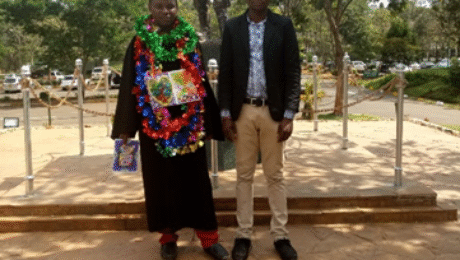

My name is Erick Masingo Wasike, and my story is a testament to the life-changing impact of education after receiving a scholarship from William Budd through NCCK. Growing up, we faced significant financial challenges. After the first term of my first year, my education was nearly cut short because my parents could not afford it. This scholarship not only covered my school fees but also allowed me to focus on my studies without worrying. It taught me that education is an equalizer.
For my tertiary education, I applied for government bursaries and took loans to pay my fees, determined not to let financial barriers hinder my dreams. In 2017, I graduated from the Technical University of Kenya with a degree in Electrical Engineering. Today, I’m a contractor in solar supplies, and my dream is to venture into entrepreneurship and create job opportunities for others.
Thank you, William Budd, for contributing to brightening my future. My earnest plea is to consider sponsoring students right from their first year, but if your generosity can be extended to those who qualify for tertiary education, that would be wonderful.
- Published in Coast Region, Western Region
Uniting for Progress: Vihiga’s Path to Community Transformation

The Challenge
Vihiga County in western Kenya faced interconnected challenges threatening community wellbeing:
- Social issues: Increased gender-based violence, rising suicide rates, and rampant drug abuse
- Political disunity: Early campaigning and exploitation of youth for political gains
- Economic struggles: Poor infrastructure and high unemployment despite rich resources
- Governance gaps: Inadequate citizen engagement creating disconnect between leaders and community
Our Approach
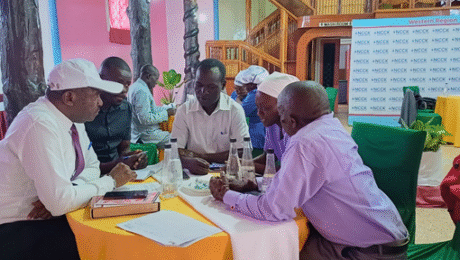
The Intracounty Dialogue brought together religious leaders, community representatives, and local stakeholders for an in-depth conversation on the challenges facing Vihiga County. The program utilized:
- Facilitated group discussions
- Collaborative scenario building
- Inclusive problem-solving approaches
- Cross-sector partnership development
Key Outcomes
“This engagement has opened our eyes to the power of unity. As religious leaders, we now understand our crucial role in shaping the fabric of our society. Together, we can guide Vihiga towards a brighter, more prosperous future.”
— P.C Seth Agala, NCCK Western Region Chairman
The dialogue created tangible commitments and plans:
Religious Unity
Religious leaders committed to fostering unity among churches and providing direction to society, recognizing their essential role in community building.
Improved Governance
Stakeholders established concrete plans to enhance information dissemination and create meaningful public participation channels.
Integrated Civic Education
Church leaders pledged to incorporate civic education into their sermons and increase involvement in community development initiatives.
Economic Empowerment
The community identified specific programs for youth entrepreneurship and agricultural development to address unemployment.
The Transformation Journey
Before: Vihiga County struggled with disunity, social decay, and economic stagnation. The lack of cohesive leadership and citizen engagement left the community vulnerable and directionless.
During: The Intracounty Dialogue created a platform for open conversation, collective problem-solving, and development of actionable strategies.
After: Local leaders and community members took ownership of their challenges with a renewed sense of unity and purpose. Religious leaders committed to more active roles in community development, laying groundwork for improved governance, social cohesion, and economic progress.
- Published in Western Region
Woman Leader Appointed to Sacred Cultural Committee After Decades of Male-Only Leadership

The Challenge
In Bungoma County, cultural committees have historically been exclusively male domains. The prestigious Isusu ya Masava cultural institution, responsible for vetting traditional duty bearers, had never included women in its ranks. This systematic exclusion limited women’s influence in cultural governance and perpetuated gender inequality across generations.
A Trailblazer Emerges
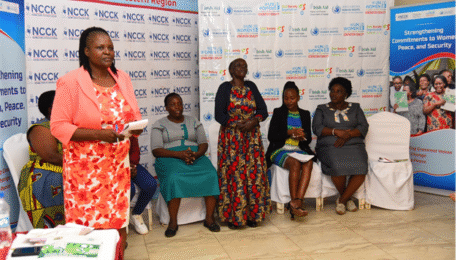
Sella Mutsotso, a dedicated women peace actor and grassroots leader, made history by becoming the first female secretary to the Isusu ya Masava committee. Her groundbreaking appointment represents a seismic shift in traditional governance structures, creating a pathway for women’s participation in cultural leadership positions previously considered untouchable.
The Path to Change
Through NCCK’s grassroots engagement program, supported by UN Women and Irish Aid, Sella received comprehensive leadership training and strategic advocacy skills. The project’s careful engagement with cultural gatekeepers and consistent community sensitization helped challenge traditional norms while respecting cultural values.
UN Women’s sustained grassroots engagements played a crucial role in facilitating this breakthrough, demonstrating how international support can help transform local practices when approached with cultural sensitivity.
Impact That Matters
Sella’s appointment has revolutionized cultural governance by establishing a precedent for women’s participation in traditional decision-making bodies. As secretary to the Isusu ya Masava committee, she now influences the vetting and appointment of cultural duty bearers, ensuring women’s perspectives are considered in traditional governance.
This success demonstrates how persistent advocacy and cultural sensitivity can transform centuries-old patriarchal structures while maintaining cultural integrity. Her achievement opens doors for other women to participate in cultural leadership across Kenya.
“This appointment isn’t just about me – it’s about every woman who has been told that tradition means exclusion. We can honor our culture while also embracing equality.” – Sella Mutsotso
- Published in Western Region