

Transformation of Athi Ward through tree planting
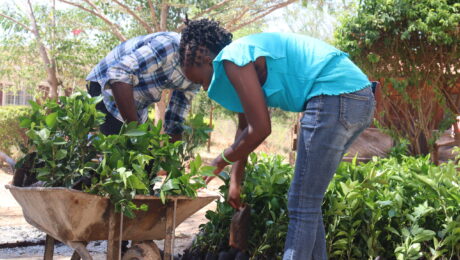
For years, residents of Athi Ward have been grappling with unpredictable weather—intense droughts, soil erosion, and dwindling water supplies. But now, a remarkable change is taking place. A whopping 60,000 tree seedlings have been planted, marking the start of a new chapter in environm restoration, all thanks to the NCCK and the support of CFGB through UCC. Among these seedlings are neem, acacia, Senna siamea, Melia volkensii, and fruit trees like mangoes and lemons, each selected for their resilience in the region’s semi-arid climate.
The once desolate landscapes are now alive with young trees, lovingly cared for by the local community. Benedict Musango, a small-scale farmer from Nzaini village, shares, “These trees are not just for us. They are for our children and their future.” With each passing day, these trees are growing stronger, providing shade, preventing soil erosion, and enhancing biodiversity. Their presence is already making a noticeable impact, with more birds returning and the soil retaining more moisture.
The community isn’t just planting trees—they’re committed to protecting them. In Kilawa, Kalivu, Monguni, and Katilini sub-locations, residents are making sure that every seedling gets enough water, protection from grazing animals, and regular care. Acacia trees will offer fodder for livestock, while Melia volkensii, often referred to as the “Mukau” tree, will eventually provide high-quality timber, opening up economic opportunities. Neem trees, celebrated for their medicinal benefits, will contribute to both health and environmental conservation. Meanwhile, the fruit trees will yield nutritious fruits, boosting their health and providing a source of income.
Breaking Barriers: How Kapkarin Village Secured Their Right to Water
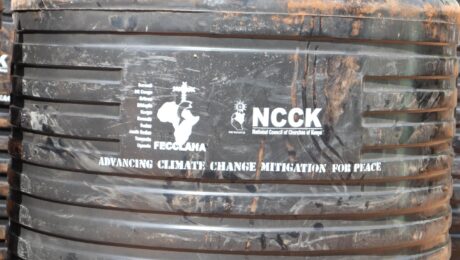
The residents of Kapkarin village in Kapsowar ward struggled with a persistent water crisis despite the allocation of funds to the Kapkarin Water Project for two consecutive financial years. Hopes of accessing clean and reliable piped water were repeatedly dashed as the local administration and project contractor colluded to stall the project, denying the community their rightful access to this essential resource.
For years, the Kapkarin Water Project remained a symbol of broken promises and lost hope. Despite millions of shillings being allocated to the initiative, the water tank stood empty and abandoned, failing to serve its intended purpose. As a result, community members were forced to trek long distances in search of water for both domestic use and their livestock. The dire situation led to devastating consequences—many animals perished due to prolonged water shortages, and children frequently missed school as they joined their families in the daily struggle to fetch water. Women and young girls bore the heaviest burden, suffering from persistent back problems caused by carrying heavy containers over vast distances. The lack of access to clean and reliable water not only threatened livelihoods but also deepened social and economic hardships within the community

Abandonded and empty tank
Determined to bring about change, the community—supported by the National Council of Churches of Kenya (NCCK) in partnership with DanChurchAid (DCA)—embarked on a journey of relentless advocacy, community mobilization, and strategic stakeholder engagement. In 2023, they conducted a social audit of the project, critically examining its progress and identifying key gaps. This effort culminated in an accountability forum that brought together community champions, the local ward administrator, and members of the project management committee. The forum resulted in a collective resolution to compel the contractor to complete the project and ensure that the community could finally access clean water.
In 2024, with continued support from the project, community members followed up on the implementation of the social audit recommendations. Their efforts revealed significant progress— the project had been revived and was nearing completion, with only the installation of air valves remaining. This milestone marked a major step forward in the community’s fight for water access and underscored the power of collective action in holding duty-bearers accountable.
With further advocacy efforts by community members, the air valves were enventually installed and the Kapkarin community members now enjoy piped water!

The community members lining up for water from a communal water point
Through resilience and collective action, the residents of Kapkarin have turned their struggles into a success story. The revival of the water project stand as a testament to the power of accountability and community-driven advocacy. As one community champion proudly stated, “Water is life, and through unity and persistence, we have reclaimed our right to it. This achievement proves that when a community stands together, no challenge is insurmountable.”
From Struggles to Surplus: How Sarah Mugo Transformed Her Farm and Secured Her Family’s Food Security Situation.
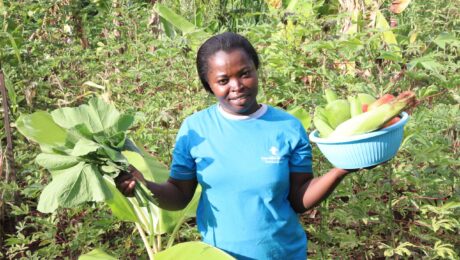
Through NCCK’s training in Conservation Agriculture (CA), Sarah embraced sustainable farming methods that have transformed her yields and secured her family’s food supply year-round.
Conservation Agriculture emphasizes three core principles: minimum soil disturbance (no tillage), permanent soil cover, and crop diversification. Inspired by these techniques, Sarah tested them on her 0.34-acre piece of land during the recent short rainy season. She planted maize using planting basins enriched with manure, a method renowned for capturing and retaining water while maintaining soil moisture. Alongside her maize, she introduced an alley of pigeon peas, a legume that enriches the soil with nitrogen and provides additional harvests.
The results were nothing short of remarkable. On land where she previously harvested only 90 kilograms of maize using conventional methods, Sarah is now set to reap an astounding 900 kilograms! This ninefold increase in yield has elevated her family to 12 months of adequate food provisioning—an indicator of a food-secure household.
But Sarah didn’t stop at maize and pigeon peas. With her husband’s unwavering support, she diversified her farm with an impressive array of crops, including millet, green grams, sweet potatoes, groundnuts, cassava, bananas, and sugarcane. She even ventured into livestock farming with dairy goats and Improved Kienyeji chicken. Supporting all these efforts is a farm pond, established with assistance from NCCK, which provides water for her crops and livestock, ensuring consistent productivity even during dry spells.
Sarah’s story is a testament to the power of climate-resilient practices and the impact of community-based support. Her determination, coupled with the knowledge she gained through training, has turned her farm into a thriving, diversified enterprise.
“I never thought I could achieve this level of success on such a small piece of land,” Sarah reflects. “Conservation Agriculture has changed everything for me and my family. Now we have enough food, and I’m even exploring markets for surplus produce.”
Her story inspires countless other farmers to adopt sustainable practices and shows that with the right tools, training, and support, farmers can overcome the challenges of climate change and build thriving livelihoods.
Here are some pictures of Sarah’s farm, showcasing her various enterprises and the incredible transformation of her land.
Regulate Food Marketing to Control NCDs – South Rift
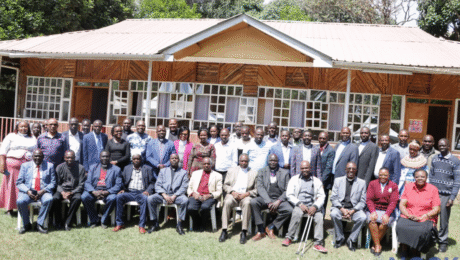
The NCCK South Rift Region has over the last two days held a forum here at PCEA Milele Resort, Nakuru, to reflect on the emerging pandemic of Non Communicable Diseases. The forum brought together leaders from the NCCK member churches in Baringo, Bomet, Kericho, Nakuru, Narok and Samburu Counties. The forum was inspired by the scripture recorded in Deuteronomy 27: 18
Cursed is the man who leads the blind astray on the road. Then all the people shall say, Amen.
And also in Matthew 18: 6
But if anyone causes one of these little ones who believe in me to stumble, it would be better for him to have a large millstone hung around his neck and to be drowned in the depths of the sea.
We in this forum recognized that the number of Kenyans suffering from Non Communicable Diseases is rising steadily and if urgent action is not taken, we will soon have a crisis in families and health facilities. We especially noted that according to the National Strategic Plan, NCDs account for more than 39% of all deaths and 50% of all hospitalizations in Kenya. Even more concerning to us is that the number of children diagnosed with diabetes, hypertension, obesity and cardiovascular diseases has risen sharply, meaning that age is no longer the main driver of these diseases.
- Declare NCDs a National Emergency
Statistics show that 77% of the health expenditure of Kenyan households goes to management of Non Communicable Diseases. On average, it costs a patient KSh 130,000 per year to manage an NCD that does not have complications. Most survivors are devastated by the fact that the health coverage benefits under the Social Health Authority / Social Health Insurance Fund (SHA/SHIF) are grossly way below this average. We anticipate that NCD related complications will rise in the short term due to non-compliance among the middle-level and low income communities.
We appeal to the government to speedily declare Non Communicable Diseases a national emergency to ensure adequate attention and action across the state to stop the pandemic from worsening.
- Regulate Marketing of Unhealthy Foods
Recognizably, the current rise in prevalence of NCDs is being driven by increasing consumption of foods that are high in salt, high in saturated fats, and high in sugar. It is a major risk for the nation that highly processed foods and sugar-sweetened beverages are intensively marketed on media and social structures. We find it diabolical that these advertisements are primarily targeted at children, who are already at risk of being diagnosed with NCDs.
We therefore call for urgent measures by the media as well as national and county governments to regulate the advertisement of the unhealthy foods, and instead provide incentives to marketers of healthy foods to make it cheaper for them to advertise. Among other elements, the regulations should curtail the placement of advertisements for foods high in sugar, high in salt and high in saturated fats near schools or during the water-shed hours when children are likely to be consuming media. Further, we call for an immediate cessation of the use of children or children-like characters in advertisement of unhealthy foods. Let us join in protecting the future generation.
We appeal to all our food producers to not be like the people described in Romans 16: 18
For such people are not serving our Lord Christ, but their own appetites. By smooth talk and flattery they deceive the minds of naïve people.
- Introduce Mandatory Front of Pack Warning Labels
In addition to restricting marketing of unhealthy foods, we call upon the Ministry of Health and all related stakeholders to accelerate the process of adopting policies to require food processors to include Front of Pack Warning Labels. The labels must be clear to read and must be of specific colour and size, and should indicate the quantity of salt, sugar and saturated fats in the product.
We state firmly that Kenyans have a right to know what they are eating, and the truth should not be hidden in illegible and unintelligible so-called back-of-the-pack nutrition content summaries that are currently in use.
- Give Kenyans a Working Health Insurance or Revert to NHIF
Kenyans are devastated by the fact that every other day, a new scandal arises tied to the newly introduced Social Health Insurance Fund, also called Taifacare. The recent report by the Auditor General that the government does not have control of the system running the health scheme is a major cause of worry for Kenyans.
In our counties, we continue to witness the suffering of Kenyan citizens who are having to pay for their healthcare following the reduction of benefits under the SHIF as compared to what was provided under the National Health Insurance Fund (NHIF). We urge the government to change the benefits package under the SHIF to be the same as what was under NHIF, or to be made better. We should not be retrogressing, but improving.
- End the Early Campaigns
We are deeply concerned that across the communities in our counties, the general mood is one of sadness and hopelessness. The economic state of our people is devastating households, who are now poorer than they have ever been. This status cannot hold for long, as it is creating an environment for incitement and mobilisation to violence and insecurity.
We appeal to the government to radically and urgently change the financial and economic policy and structure in the nation to prevent a slide into chaos. If this is not remedied urgently, we are likely to witness violence in our counties in the lead up to the 2027 General Elections.
We especially demand that politicians stop early campaigns and instead focus on service delivery.
- Conclusion
We conclude by remembering that God holds us responsible for how we feed and take care of our bodies, just as he warns us 1 Corinthians 3: 16 – 17
Don’t you know that you yourselves are God’s temple and that God’s Spirit lives in you? If anyone destroys God’s temple, God will destroy him; for God’s temple is sacred, and you are that temple.
May God help us to embrace healthy diets in our families and communities; and may God bless our communities with the resources necessary to afford the healthy foods for their households.
Signed on this 5th day of March, 2025, at PCEA Milele Resort, Nakuru.
Bishop Peter Muiruri
Chairman, NCCK South Rift Region
TRANS-NZOIA COUNTY DIALOGUE ON MEDIATION
Preamble

The Trans-Nzoia County Dialogue Forum as part of the Religious Leaders of Kenya, have held a County Dialogue forum on mediation today Wednesday 13th March 2024 at the Church Of God Police line Mitume. We reflected from Jeremiah 13: 1 – 12 urging members “to listen and hearken to the word of God or we will perish as a nation”
The Trans-Nzoia County Dialogue forum brought together delegates from religious groups and representatives of KCCB, NCCK, SUPKEM Youth, Women, and Media, in Trans-Nzoia, to deliberate on National Dialogue Committee recommendations and proposes as endorsed in this Press Statement.
Our Point of Reference: As religious leaders, we commend the National Dialogue Committee for the outstanding work it has done to ensure that Kenya still remains as one Country. However, we are concerned with some of the issues as recommended by the National Dialogue Committee that has given its report to the two principals of Kenya Kwanza Hi Excellency Dr Ruto and Azimio Hon Raila Odinga. We are aware that once the report is tabled in both houses laws will be put in place to operationalize what was agreed some of which might require a referendum causing major changes in our constitution.
Our Commitment
Having thoroughly deliberated on the resolutions as proposed by the National Dialogue Committee we commit to ensuring that peace prevails in the country following the report of the National Dialogue Committee.
Our Outcomes
The Trans-Nzoia County Dialogue Consultative Forum wishes to respond as follows to the five agenda recommendations by the National Dialogue Committee.
On Outstanding Constitutional Matters –The government ensures that parliament passes laws to ensure the realization of the rights under article 43 of the constitution for these are basic rights for all Kenyans. The government to come up with measures to ensure that the cost of living is further brought down in Kenya. This is especially hurting the vulnerable and poor members of our society. Need to relook into taxes for the Mwananchi is overburdened. Both governments to fight Corruption at all levels and eliminate nepotism.
On Implementation of the 2/3rd gender rule, we feel that this should be progressive as it is. The creation of more seats is increasing the wage bill which is already a heavy burden on Kenyans. There should be no ethnic biases, nepotism, or bribery in public appointments. Inclusivity should be seen working and taking center stage. The parliament should provide adequate checks and balances as provided for by the constitution.
On Electoral Justice and Related Matters, we support restructuring and reconstitution of the IEBC and increase the number from 7 to 9 due to the weighty election work keeping in mind that the population has increased. However, we propose that in the commission there should be a representative from NCCK for it’s an umbrella of religious groups. On the creation of counties, we feel that this will be an extra burden to the exchequer and yet even present counties are not getting enough funds.
On Audit of the 2022 presidential election, we recommend that an audit of the past election should not be conducted. This will open old wounds, mistrust, and hatred among Kenyans. What is important is to ensure improvement in the way we will hold our next general election by putting structures, laws, and competent personnel to ensure credible elections.
On Entrenching Funds into the Constitution the two proposed funds should be entrenched (The national government constituencies’ development fund and the National Government affirmative action fund). However, the Senate oversight fund should be scrubbed. That is an extra burden to Kenyans.
On the Establishment and Entrenchment of State Offices, we agree that the office of the leader of the official opposition is to be created. However, the office of the prime minister is to be given to the opposition side so as to act as checks and balances to the government.
On Fidelity to Political Parties/ Coalitions and The Law on Multiparty, Democracy-Preventing interference with political parties/ coalitions, we support the creation of an independent Regulatory body to look into issues of political parties. The political registrar’s body is more of a government agency hence always controlled by the executive. However, we recommend a representative from the NCCK to be nominated to the body. Political parties to be allowed to form coalitions before or after the elections. This is healthy for multipartism and provides strength for parties. However, party hopping should not be allowed at all costs to bring discipline to political parties. Once one defects, that seat should be declared vacant.
CONCLUSION:
We thank all the participants of the county dialogue mediation group and partners for their wisdom in availing such a platform.
It is a good opportunity for us, the Religious Leaders, to come together with other key sectors and stakeholders within the County in order to dialogue and chart our own course towards the peace and prosperity of our beloved Country and County of Trans-Nzoia.
We hereby bind ourselves to the use of this County Dialogue Forum with integrity and sound thought for the collective betterment of our well-being as representatives of diverse Communities and interest groups in Trans-Nzoia County, and we as the people’s spiritual leaders, commit to remain faithful to our God, who has called us all to be his stewards and overseers over his people.
Long live our County, long live Kenya!
To God be the Glory!
Signed on the 13th of March, 2024 by:
Rev. Aggrey Olumola
Chairman of NCCK Trans-Nzoia Coordinating Committee