

Emmaculate Mutuku – NCCK Helped Me
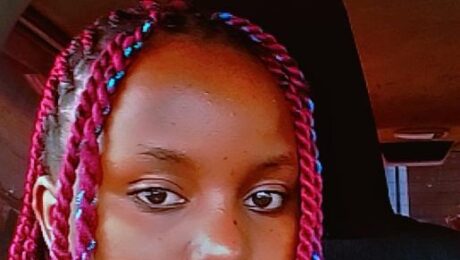
My name is Emmaculate Mutuku, born and raised in Kilungu, Makueni County. I have been raised by my grandparents since my parents went to Nairobi in search of employment. I’m from a family of four, and both my parents are jobless since corona period. Our firstborn brother has just gotten a job, and our third born is still in search of employment having completed her degree in education.
Throughout my life, I have developed a passion for Science and luckily enough I fell in love with chemistry back in high school. This prompted me to choose Biochemistry because it is wide and has a wide range of opportunities. And true to my passion, I am currently pursuing a Bachelor in Science (Biochemistry) degree at Kenyatta University.
But all this would not have been possible without the scholarship by the National Council of Churches of Kenya (NCCK). The scholarship has helped me get through high school studies. I have reached thus far because of God through the NCCK.
Even though I struggle to pay university fees, I aspire to bring hope especially to the young people who feel low because their dreams and visions seem to be dying due to lack of support.
- Published in Education and Health, Lower Eastern Region, Transformational Stories
Empowering Youth for a Brighter Future: The Impact of the NCCK Linkage Program in Makueni
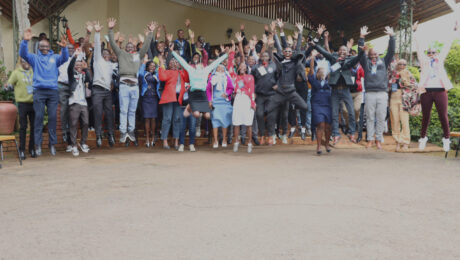
The problem of youth unemployment came to limelight during the Kenya Gen-Z protests. The NCCK linkage program in Makueni county made strides towards bringing a solution to this problem. During the first phase, 259 youths from 20 groups received mentorship on various matters including mental health, personal development and social skills helping them to adopt acceptable survival mechanisms in the society in spite of the numerous challenges they are facing. During the second phase, 80 youths were linked to various institutions helping them learn useful skills to boost their innovation and employability and gain access to funding for those in or are aspiring self-employment.
Daniel Musyoka before the NCCK linkage he was running his small cyber business but it used not to be very much effective. He highlights that he struggled to manage the business’ finances more so differentiating his personal and capital finances. The linkage program came in handy as a mentor and teacher for him in managing business and resources. This has in turn led to a growth in his business. He was mentored on how to monitor the business’s growth, which he could not do before. This has been very impactful as he is now able to monitor the progression of his business. He looks forward to growing his business through the skills he attained and employ young people.
- Published in Lower Eastern Region
Transformation of Athi Ward through tree planting
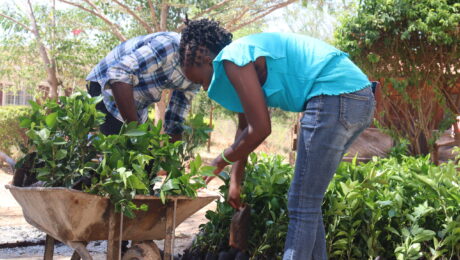
For years, residents of Athi Ward have been grappling with unpredictable weather—intense droughts, soil erosion, and dwindling water supplies. But now, a remarkable change is taking place. A whopping 60,000 tree seedlings have been planted, marking the start of a new chapter in environm restoration, all thanks to the NCCK and the support of CFGB through UCC. Among these seedlings are neem, acacia, Senna siamea, Melia volkensii, and fruit trees like mangoes and lemons, each selected for their resilience in the region’s semi-arid climate.
The once desolate landscapes are now alive with young trees, lovingly cared for by the local community. Benedict Musango, a small-scale farmer from Nzaini village, shares, “These trees are not just for us. They are for our children and their future.” With each passing day, these trees are growing stronger, providing shade, preventing soil erosion, and enhancing biodiversity. Their presence is already making a noticeable impact, with more birds returning and the soil retaining more moisture.
The community isn’t just planting trees—they’re committed to protecting them. In Kilawa, Kalivu, Monguni, and Katilini sub-locations, residents are making sure that every seedling gets enough water, protection from grazing animals, and regular care. Acacia trees will offer fodder for livestock, while Melia volkensii, often referred to as the “Mukau” tree, will eventually provide high-quality timber, opening up economic opportunities. Neem trees, celebrated for their medicinal benefits, will contribute to both health and environmental conservation. Meanwhile, the fruit trees will yield nutritious fruits, boosting their health and providing a source of income.
Maina Kamanda – Scholarship was Transformative

Maina Kamanda
My name is Maina Kamanda, and I hail from Kitui County in the Lower Eastern region of Kenya. I come from a humble family of three. Sadly, both my parents have passed away, leaving me and my brothers to navigate life’s challenges together. My brothers are local farmers, earning a modest income, which has instilled in me a strong desire to pursue my dreams and create a better future for myself and my community.
Currently, I am pursuing a Bachelor of Commerce degree at the University, specializing in Risk Management and Insurance. This field resonates with me deeply, as I aspire to become a leading entrepreneur and an influential figure in the insurance sector. My goal is to eventually establish my own insurance company, where I can provide innovative solutions and empower others in the industry.
Receiving a scholarship from the NCCK has been a transformative experience for me. It allowed me to complete high school education and enroll in the university with a clear and focused mindset. The support I have received has helped me achieve numerous goals along the way, equipping me with essential skills and experiences that will serve me throughout my life.
I am committed to making a significant impact in my community and beyond, with a goal of mentoring and sponsoring individuals who, like me, aspire to improve their lives. I believe in the power of education and mentorship, and I envision a future where I can contribute to the leadership and development of my country.
- Published in Education and Health, Lower Eastern Region, Transformational Stories